Synopsis
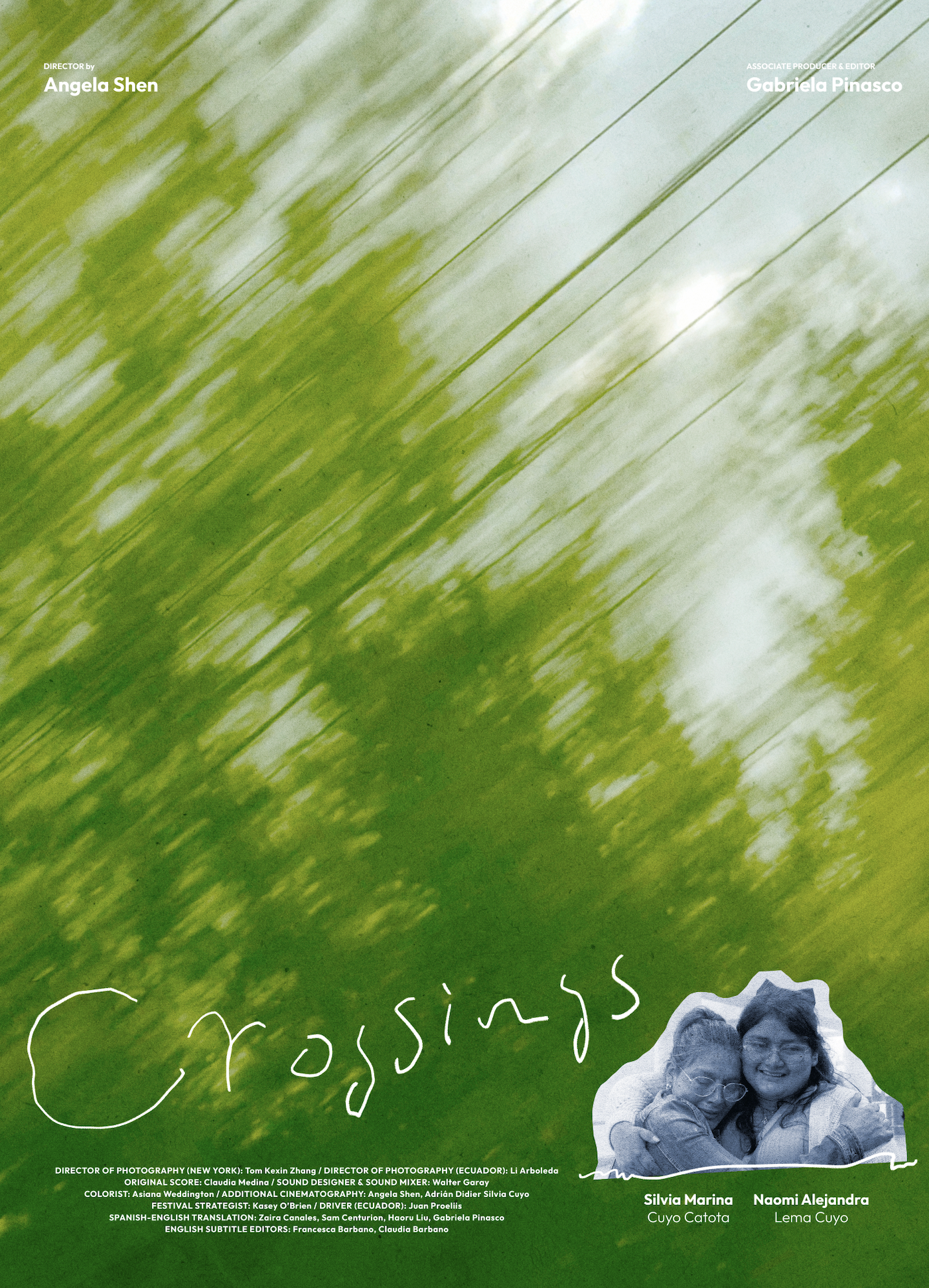
Crossings is an intimate portrait of Silvia, an Indigenous Ecuadorian mother rebuilding her life in New York after surviving a lifetime of violence — from discrimination against Indigenous women to a major sexual assault she has never spoken about. Having fled Ecuador and then granted asylum in the United States, Silvia works tirelessly while holding onto one hope above all else: reuniting with her daughter Naomi, who could not make the journey because of her disability.
Filmed across New York, Latacunga, and Quito, the film follows Silvia's asylum case against the backdrop of a historic surge in Latin American migration. Her present-day life in New York unfolds alongside memories of the home she left behind, revealing how migration reshapes identity and creates space for a dignified life. After three and a half years apart, Crossings culminates in Silvia's reunion with Naomi at the airport — a moment that realizes the hope that has carried her through decades of hardship.
CROSSINGS is a timely portrait of a woman’s extraordinary resilience, illuminating both the possibilities and the limitations of asylum through the universal language of a mother’s love.
Topic Summary
Crossings begin where most immigration stories end: after the border. The film examines what comes after—living without legal status, navigating the asylum system, working to support family across borders, and waiting years for an uncertain future.
Silvia’s story reflects a growing reality for many Ecuadorian families who immigrated to the US. Since 2021, more than 244,000 Ecuadorians have applied for asylum in the United States as violence and economic instability have driven increasing numbers of people to leave the country. At the same time, nearly two in three women in Ecuador have experienced gender-based violence during their lifetime, making domestic abuse an often overlooked driver of migration.
By focusing on one family’s everyday life, Crossings looks beyond headlines and political debate to examine the long-term consequences of migration. It asks what family separation, survival, and belonging look like long after the journey is over.
Keywords: Asylum, Immigration, Latin America, Motherhood, Border
Director’s Statement
first met Silvia at an immigration center in New York, though I had heard about her long before that. Over the months that followed, I came to understand that the world had repeatedly treated Silvia with violence, and she had responded with kindness. Throughout filming, her daughter Naomi remained at the center of her life. Naomi was the reason Silvia worked fourteen-hour days to send money home and the only one of her four children still living in Ecuador. For more than three and a half years, Silvia worked to reunite her family.
As the story unfolded, I kept wondering how to make the audience feel the distance between Silvia and Naomi, rather than simply hear about it. That question led us to film in both New York and Ecuador as Naomi’s visa application began moving forward.
I
There was always a delay between Silvia and me. Her words traveled through an interpreter before reaching me, and it was only later, while translating her testimony line by line in the edit room, that I fully understood what she had survived. Because I could never take language for granted, I learned to pay closer attention to body language, eye contact, gestures, and silence. Our trust was built through presence. Kindness, generosity, and forgiveness are the words I continually return to, and they guided the making of the film across the language that initially separated us.
The film is called Crossings because a life is shaped by these moments: chance encounters, intersecting paths, and the ways people carry one another forward. Silvia came to the United States from Ecuador; my family came from China. Our lives and identities are very different, but our paths crossed and created meaning. I make documentaries because I believe people are always more complex than the labels the world assigns them—an immigrant, a survivor—and because kindness, compassion, and dignity do not disappear in the face of hardship. Those are the qualities I hope Crossings preserves.